In many organizations, a single product category can have hundreds—or even thousands—of variants, each designed to meet specific customer needs, technical requirements, or market segments.
While the design and product development teams can easily distinguish these variants because of their deep understanding of the product architecture and naming conventions, employees from other departments often face a different reality. For someone in sales, procurement, operations, customer support, or finance, identifying the right product from a long list of similarly named variants can be confusing and time-consuming.
This raises an important question: How can anyone without in-depth product knowledge quickly differentiate one variant from another and confidently select the exact product they are looking for?

CLASSIFICATION MANAGER
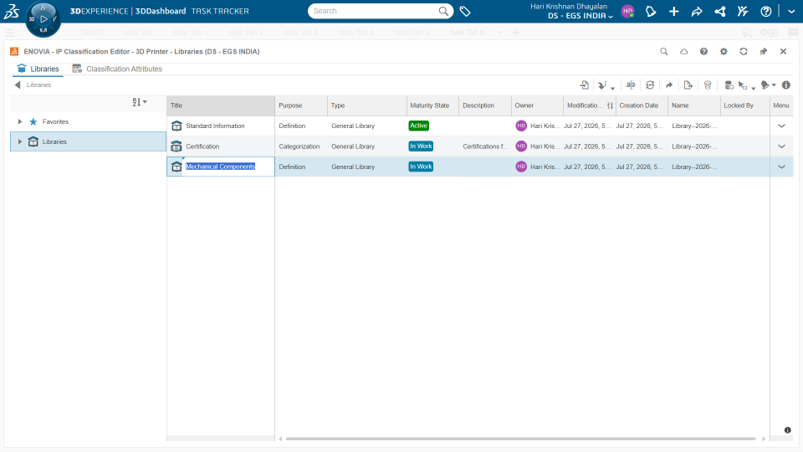
Classification Manager serves as a centralized library for organizing and classifying your products using rich, structured taxonomies. By defining classes and subclasses, it establishes a clear and consistent product hierarchy, making even the most complex product portfolios easy to understand and manage.
With powerful classification schemes and advanced organizational capabilities, Classification Manager enables users across all departments to quickly identify, navigate, and retrieve the right product information. It also enhances the management of 3DEXPERIENCE Intellectual Property (IP) by providing a standardized framework for organizing and accessing product data efficiently, improving collaboration, reducing search time, and ensuring consistency across the enterprise.
Key Components of Classification Manager
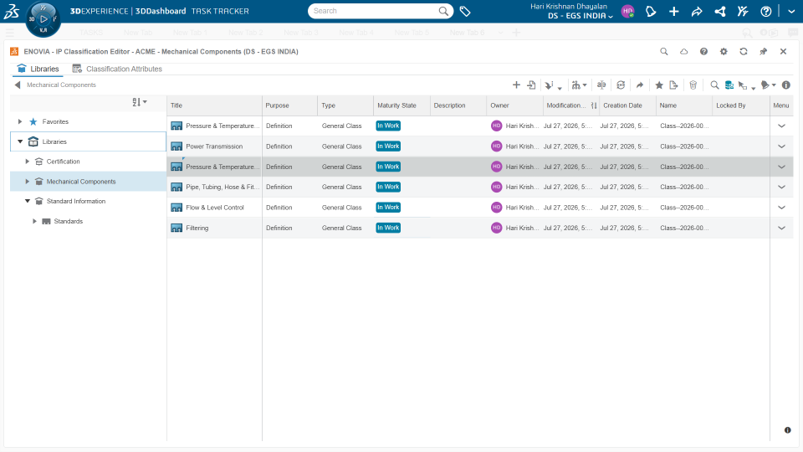
- Definition Library:The Definition Library acts as the foundation of the classification framework. It stores reusable classification definitions, templates, and metadata that standardize how products are categorized across the organization. Since these definitions can be reused for multiple products, consistency is maintained throughout the product lifecycle.
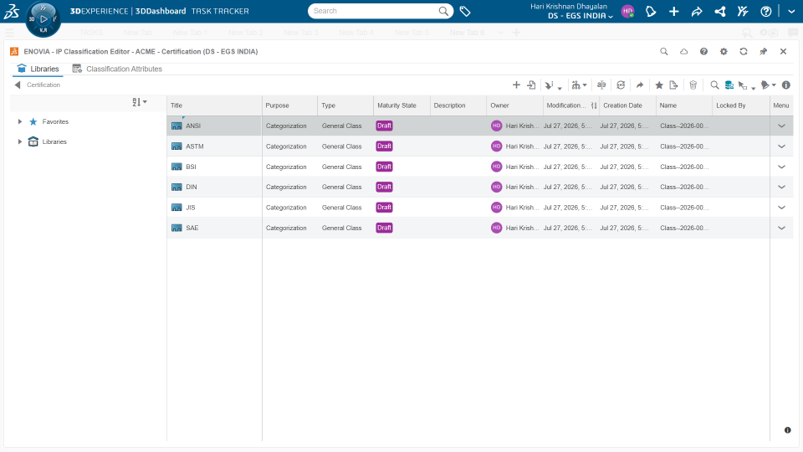
- Categorization Library:The Categorization Library organizes products into a logical hierarchy based on business needs, engineering standards, or industry practices. It enables organizations to build structured taxonomies that simplify navigation through extensive product portfolios.
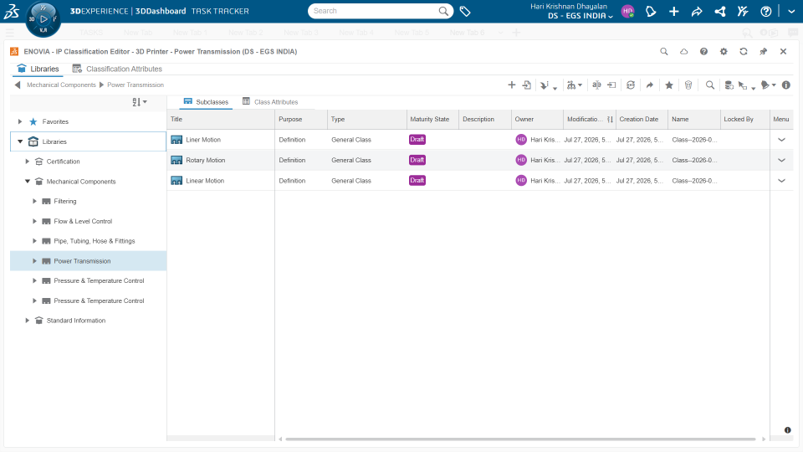
- Class: A Class represents a major product category that groups together products with similar characteristics or functions. Each class serves as a container for products sharing common business or engineering attributes. Each class can have its own predefined attributes that describe products within that category.
- Sub-Class:A Sub-Class further refines a class into more specific product groups, allowing greater precision during product selection.
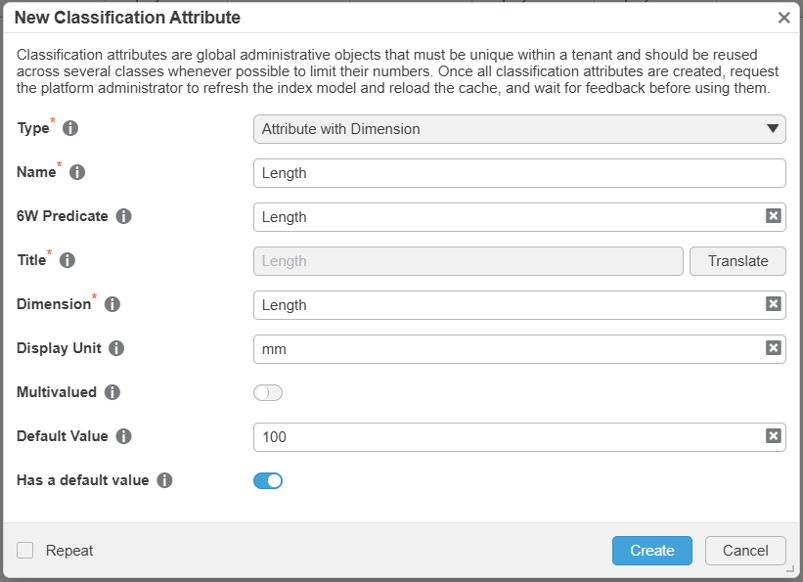
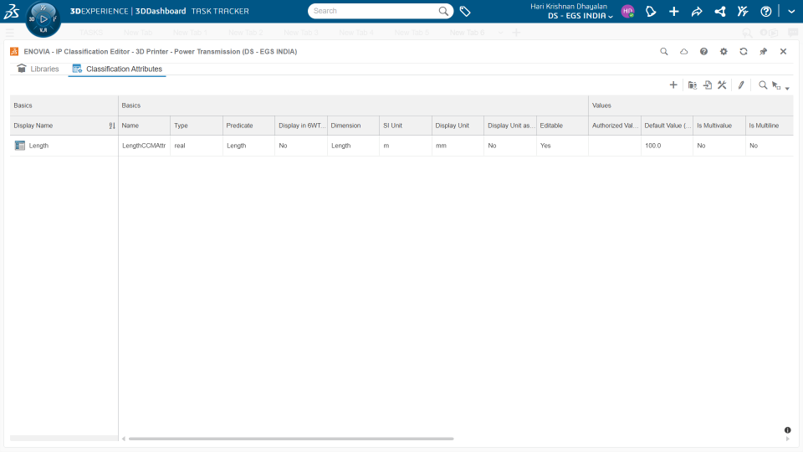
- Classification Attribute:Classification Attributes define the characteristics used to distinguish products within a class or sub-class. These attributes capture technical, physical, functional, or commercial properties that help users filter and compare products effectively.
Unlike product names, which may be ambiguous, classification attributes provide objective criteria for identifying products. Users can search or filter products using these attributes, dramatically improving search accuracy and reducing selection errors.
How Classification Manager Benefits Different Teams
Classification Manager is valuable across the entire organization, not just within engineering.
Sales Teams
- Quickly identify products matching customer requirements.
- Reduce dependency on engineering for product clarification.
Procurement
- Locate approved product variants faster.
- Minimize duplicate purchases and improve supplier consistency.
Operations and Manufacturing
- Access standardized product information for planning and production.
- Reduce errors caused by incorrect product selection.
Customer Support
- Identify the correct product configuration during service requests.
- Resolve customer issues more efficiently.
Engineering
- Maintain a structured, reusable classification framework.
- Improve product data quality and governance.
Business Benefits
Implementing Classification Manager delivers measurable improvements across the product lifecycle:
- Faster product search and retrieval
- Improved product identification accuracy
- Reduced duplicate product creation
- Standardized product taxonomy
- Better collaboration across departments
- Enhanced reuse of engineering knowledge
- Improved data quality and governance
- Simplified management of large product portfolios
- Stronger Intellectual Property (IP) organization within the 3DEXPERIENCE platform
Conclusion
As product portfolios continue to grow in size and complexity, relying solely on product names or part numbers is no longer sufficient. Organizations need a structured and scalable approach that allows every employee—not just product experts—to locate the right product quickly and accurately.