
SIMULIA Plastic Injection Engineer: From Mold Trial-and-Error to Virtual Process Validation
SIMULIA Plastic Injection Engineer helps engineers address the challenges of injection molding before costly physical mold trials begin. Designing a plastic component is only one part of the injection molding challenge. A geometry that performs well as a product may still be difficult to manufacture consistently. Gate location, polymer selection, injection conditions, cavity layout, cooling-channel design, and material shrinkage can all influence the quality of the final molded component.
For many manufacturers, these challenges are traditionally addressed through successive mold trials. A tool is manufactured, parts are molded, defects are identified, and modifications are made to the tooling or process before another trial is conducted. When problems such as incomplete filling, weld lines, air traps, excessive pressure, uneven cooling, or warpage appear late in development, the resulting iterations can increase both tooling costs and development time.
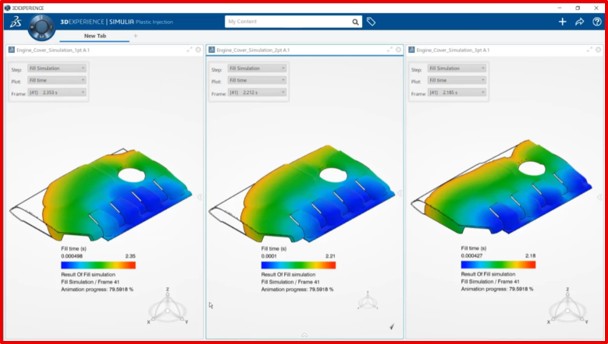
SIMULIA Plastic Injection Engineer, available on the 3DEXPERIENCE® platform, provides a virtual environment for studying the injection molding process before extensive physical trials begin. Engineers can investigate how the polymer flows through the cavity, how the part is packed and cooled, and how the resulting thermal and mechanical behavior can affect the finished component
See How the Cavity Fills Before Cutting Steel
The way molten polymer enters and progresses through a cavity can have a significant influence on the final part. A seemingly small change in gate location or injection condition can alter the flow front, pressure distribution, temperature, and meeting points of the polymer.
Plastic Injection Engineer allows engineers to visualize the progression of the melt during the filling stage and understand what is happening inside the cavity rather than relying only on observations from molded samples.
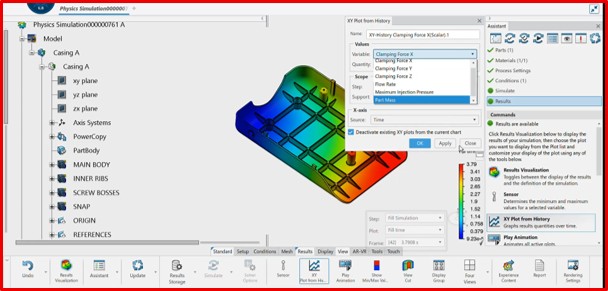
Simulation results can be used to examine:
- Filling progression and filling time
- Polymer pressure and temperature
- Velocity and shear-rate distribution
- Weld-line formation
- Potential air-trap locations
- Incomplete or unbalanced filling
This provides an opportunity to investigate alternative gate locations, processing conditions, or part designs while changes are still relatively easy to implement.
Turn Mold Cooling into a Design Variable
Cooling is often one of the key contributors to injection molding cycle time, but its influence extends beyond productivity. Temperature variations across the cavity can affect shrinkage, dimensional accuracy, residual stresses, and ultimately the shape of the molded component.
SIMULIA Plastic Injection Engineer can be used to study the interaction between the molded part and the mold cooling system, helping engineers understand where heat is being removed effectively and where thermal hot spots may remain.
Benefits
- Virtually test the performance of plastic part and mold tooling designs with an intuitive, guided simulation assistant that minimizes the learning curve
- A single role covers the needs for all industries, all key workflows, and all user personas
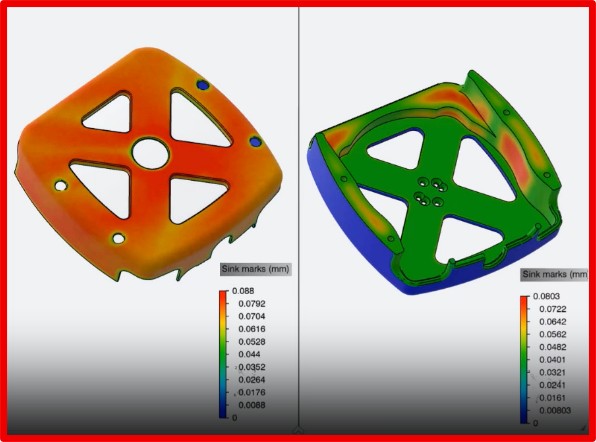
- Predict common molding defects including: weld-lines, sink marks, air traps and incomplete filling (short shots)
- Evaluate the effectiveness of mold cooling system designs
- Take advantage of Structural and Process Apps to tackle advanced workflows like non-linear multi-scale material modeling and design of experiments (DOE)
- Simple, easy to use interface with a guided simulation assistant to minimize the learning curve
- Predicts common molding defects including, weld-lines, sink marks, air traps and incomplete filling (short shots)
- Predicts required injection pressures and tool clamping forces, enabling selection of an appropriate injection molding machine
- Simulation made accessible on-premise and on-cloud. Execute simulations, store and manage data on premise, private cloud or DS cloud with support for HPC
Design the Feed System Around the Flow
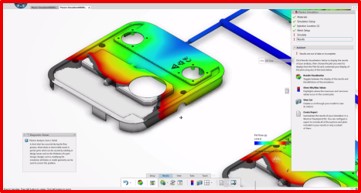
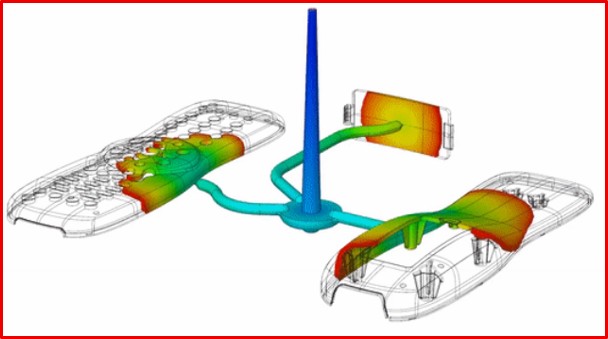
A successful molding process depends on more than the cavity itself. The sprue, runners, gates, and cavity arrangement determine how material is delivered to the component.
Plastic Injection Engineer supports the analysis of different feeding configurations, including single- and multi-cavity molds, family molds, hot runners, cold runners, and valve-gated systems.
Bring Product, Mold, and Process Engineering Together
Injection molding development typically involves multiple engineering disciplines. Product designers focus on geometry and functionality, mold designers develop the tooling, and process engineers determine suitable manufacturing conditions.
When these activities are disconnected, changes made by one team may not fully account for their impact on the others.
With Plastic Injection Engineer operating within the 3DEXPERIENCE platform, design and simulation information can be managed within a connected environment. This provides a common foundation for discussing how changes to the product or tooling influence manufacturing performance.
The result is a more connected workflow in which engineers can move from:
Product Design → Mold Design → Process Simulation → Defect Investigation → Design Improvement
without relying exclusively on physical trial-and-error.
Move Injection Molding Decisions Earlier in the Development Cycle
SIMULIA Plastic Injection Engineer helps engineering teams investigate these factors within a single simulation workflow, enabling product and mold decisions to be supported by virtual evidence.
For manufacturers working with complex plastic components, multi-cavity molds, tight dimensional requirements, or expensive tooling iterations, this can shift injection molding development from a predominantly trial-and-correction approach toward simulation-guided engineering.
By bringing injection molding process simulation onto the 3DEXPERIENCE platform, organizations can investigate process behavior earlier, reduce unnecessary physical iterations, and develop greater understanding of how part design, material, tooling, and process conditions work together to determine the final molded product.

Author:
Dwarkesh is a Application Engineer specializing in engineering simulation and virtual product development. He works with SOLIDWORKS Simulation, 3DEXPERIENCE SIMULIA, and Abaqus, with a focus on structural, thermal, fluid flow, and multiphysics analysis. Passionate about simulation-driven engineering, he enjoys exploring innovative CAE solutions, solving complex engineering challenges, and helping engineering teams leverage simulation to improve product design and performance.